

The Lonely Planet Pocket Guide to Tokyo "Walk Shibuya" describes Shibuya.
Thanks to its iconic intersection, Shibuya serves as a kind of visual shorthand for Tokyo in the global imagination. The thrumming crowds, glowing lights and giant video screens that you associate with the city? They’re all here – and turned up to the max. Shibuya is a center for youth culture, and particularly fashion, music and nightlife; it’s among the best places in the city for clubbing [Me: "Oh, to be 20 again!"], live music and shopping….To the west are the hip residential enclaves of Daikanyama and Naka-Meguro; these neighborhoods …can give you an alternative image of life in the capital – one that’s low-rise and low-key (but still very Tokyo).

- Shibuya Station
We took the Chiyoda Line from Nezu Station a few blocks from our apartment, transferred to the Hamzomon Line at Otemachi Station, and got off at Shibuya Station. The map above gives you a good idea of just how complicated Shibuya Station is underground. What it doesn’t show you is how complicated the Shibuya Plaza scramble is above ground (video below), nor does it show you the massive redevelopment of the station and plaza underway, which will include the construction of several new high rises (photo below).

- Hachiko Exit
We headed for the Hachiko Exit to see the famous bronze statue of Hachiko, the Akita who would meet his professor owner at the station on his way home from work every evening. After the professor died, the dog continued to wait for his master at the station every day until he himself died ten years later.

- Myth of Tomorrow
On the way to the Hachiko Exit we saw a giant mural painted by Taro Okamoto in 1967 called Myth of Tomorrow, depicting the explosion of the atom bomb over Hiroshima and the resilience of those who survived that destruction. Lonely Planet says the 30-meter-long mural was commissioned by a Mexico hotel but went missing in 1969. It turned up in 2003 and after restoration was installed in Shibuya Station. It reminded me of Picasso’s Guernica. You can read more about the mural here.


- Shibuya Center-gai
This is the main drag and it’s pretty tacky, full of tourist restaurants, bars, clothing stores, superstores, and night spots. There is even a 6-story, vertical IKEA.

We followed the walk through Shibuya but didn’t linger, except to note a few spots from Lost in Translation, such as…
- The Hidden Karaoke Bar

- The New York Bar in the Park Hyatt Hotel

Which was closed for remodeling. Unimpressed by either the architecture or the throngs of tourists in Shibuya, we decided to take the metro to our next neighborhood on the walk.
- Naka-Meguro
A few steps from the metro was a small fast food joint selling only soba noodles with or without a side of tempura. We ordered by the touch screen at the door (thank goodness for the images of the food!), found a seat at a counter among the slurping salary men, and waited for our order numbers to light up on the video display. I had the cold soba noodles with tempura

and my husband had them hot. Super tasty!

Fortified, we followed the Lonely Planet Guide, which said, “If you don’t mind going uphill, you can walk to Daikanyama from….” So, we did.
Daikanyama.
- Miffi Cafe Tokyo
Cute themed coffee shop full of moms and their kids. By the way, cute = Japan. Hello Kitty, Miffi, and puppies with their own haberdasheries are everywhere and everybody seems to think that’s cool, not kitsch. We got with the program.

- Bonjour Records
Per Lonely Planet: “A good introduction to hipster Daikanyama, this small boutique has a limited - but highly curated - selection of music and fashion items from Japan and overseas.” Site of our first purchase: a black baseball cap with the inscription “Ambient Dub” for my husband.


- Okura
Per Lonely Planet: “Okura may seem out of place in trendy Daikanyama – the shop looks like a farmhouse – but it is actually a neighborhood landmark. It’s full of artsy, original clothing items, almost all of which are made from natural textiles and dyed a deep indigo blue.” If we were rich, we would have bought out the store.

- Daikanyama T-Site
There was some kind of an antiques market cum food stall thing going on here, which made for great people watching. The basket weave curtain wall of the buildings, T-Site’s signature, was very appealing, as was the impressive bookstore.


- Kyu Asakura House
Per Lonely Planet: “The Kyu Asakura House is a rare example of early-20th-century villa architecture, so hidden that many locals don’t even know it exists. The home built in 1919 for the family of a local statesman, is well preserved and open to the public daily (except for Mondays).” The house, with its tatami rooms opening onto views of the landscaped garden, was gorgeous!


- Meguro River Promenade
We walked down the steep hill behind the Asakura House to a coffee shop where we each had an espresso macchiato

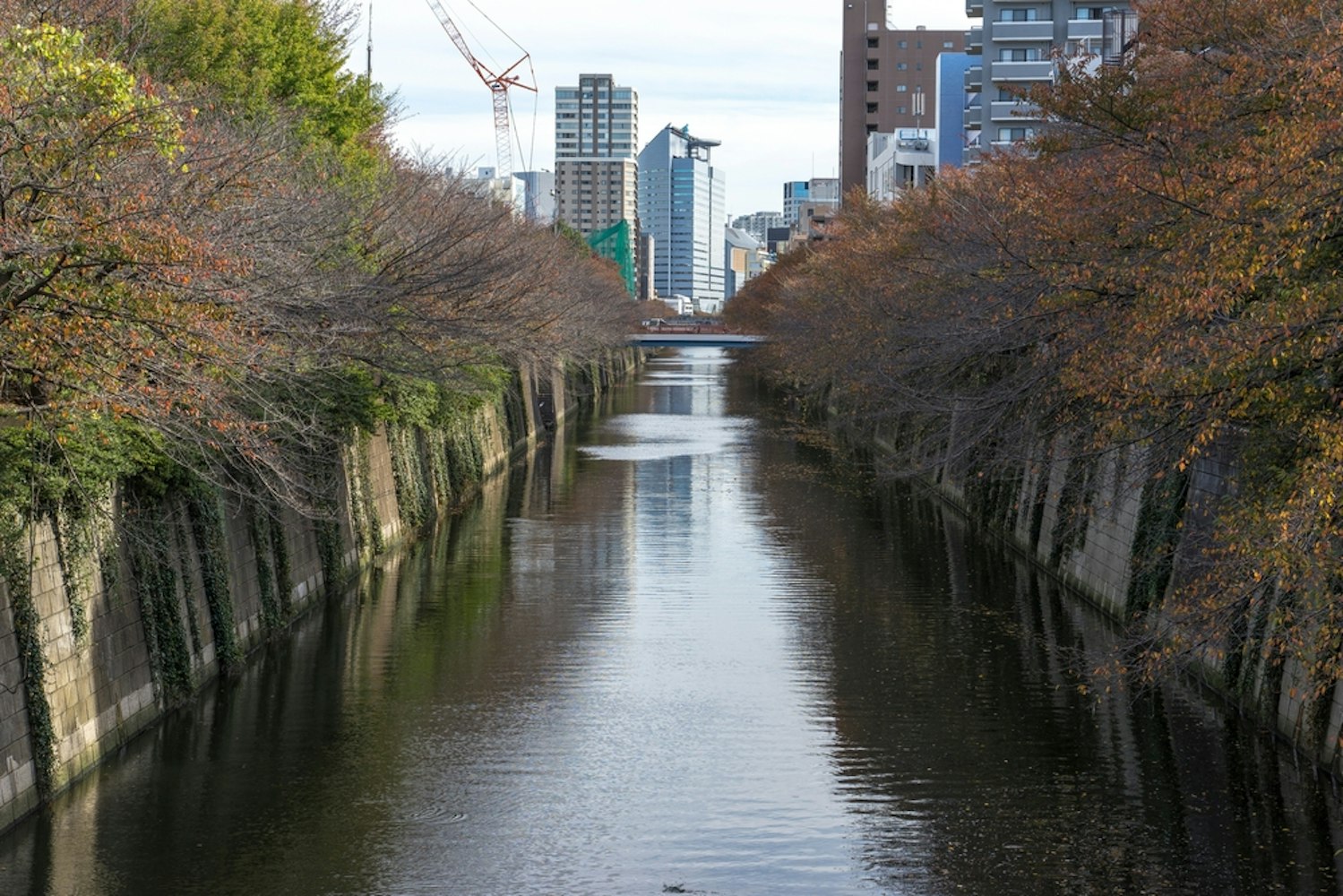
and then on to the Meguro River,
- Exile Tribe Station

The store is connected to the boy band, Exile Tribe (below), and a group of young girls were transfixed by a huge video screen projecting the band in the store. Their concert posters were all over Tokyo.

Exile Tribe Station was the site of our second purchase: a furry to hang on my purse, a strange plush monkey wearing headphones, spitting out a little Aryan girl with blond pigtails, reminding me simultaneously of both Heidi and Alien . But when in Japan….

On our way back to the apartment we stopped for a sake tasting. I had never liked sake, having always drunk it warm, but on the JAL flight, I ordered Fukucho Hattanso Junmai Daiginjo "Shokafu" premium sake cold, and I really liked it. So why not see what this small point-of-sale shop had to offer?

We tasted three or four of various grades and sweetness and bought a small bottle of the one we liked best. Then we returned with our third purchase of the trip to HATa.
Shinjuku
What to do about dinner? We wanted to try yakatori, those barbecued skewers of chicken, at an izakaya. Roughly translated, an izakaya is a place to hang out and drink alcohol. Lonely Planet suggested the best place to find the biggest concentration of izakayas in Tokyo was in Shinjuku, specifically in Omoide-yokocho, a rabbit warren of dimly lantern-lit, narrow alleyways two blocks wide and several long.
Shinjuku is split into two areas: one filled with hotels and high-rise offices; the other jammed with a riot of neon signage, karaoke establishments, and seedy bars where young women in short skirts and high heels entreat you to come in. Shinjuku is also home to Cross Space, a jungle of 3-D, digital billboards, the most famous being one that wraps around the corner of a building and sometimes displays anime, commercial ads, and a mischievous, moving calico cat (video below).
- Omoide-yokocho


- Cross Space Shinjuku


November 6, 2025 - Roppongi Hills and Azabudai Hills
Roppongi Hills
Lonely Planet says
Roppongi has undergone one of the most dramatic redevelopments in modern Tokyo history: once synonymous with uninhibited nightlife, it's now a world-class destination for art, design, dining and retail. Many of these newer attractions are located in "mixed-use" complexes - post-modern mega malls, each of which has at least one of its own signature cultural facility such as a museum or art gallery. That’s in addition to shops, restaurants, public green space, residences and at least office tower or luxury hotel.
We started Walk Roppongi at Exit 3 from the Roppongi metro station on the Hibiya Line. When we got above ground, we had considerable difficulty following the Google directions to our destination, the Mori Art Museum, because of all the different plaza levels, esplanades, office towers, and multi-story escalators—it was hard to get a GPS signal. But we finally figured it out and knew we were in the right spot when we saw Louise Bourgeois’ giant Maman.

- Mori Art Museum
Before entering the exhibit, we had lunch at the museum cafe on the 53rd floor of the Roppongi Hills Mori Tower--Croque Monsieur with a view of the vast Tokyo cityscape: low-rise and high-rise buildings, arterials and lanes, bridges and lakes--even the Tokyo Tower mimicking the Eiffel--as well large expanses of acreage populated by the dearly departed.

.JPG)

The special exhibition at the Mori featured works by Sou Fujimoto, the architect who designed the Grand Ring for Osaka Expo 2025, recognized by Guinness World Records as the world’s largest wooden architectural structure. A large-scale model of an arc of the Grand Ring was on display, along with Fujimoto’s drawings and models of other works, his design manifestos (the title image above), as well as an adorable display of colorful plush puppets dressed up as some of his iconic buildings, in dialogue with each other about them.


Azabudai Hills
Lonely Planet says
Tokyo’s newest big development, Azabudai Hills is the new home of teamLab Borderless, the digital art museum that has emerged as one of Tokyo’s top attractions.
Art collective teamLab formed in Tokyo in the ‘00s and has since become a big name in digital art – an emerging medium that uses digital technology, including augmented reality, to dazzling effect.
While you can now see their works at other global hotspots, like Singapore, teamLab Borderless remains their signature experience, a permanent museum home for over 50 art works.
teamLab has no map or suggested course. It’s designed more like a role-playing game: the installations feel like digital worlds, which you can explore at leisure, pausing to interact with digital avatars, which may shift, responding to your presence – or even beckon you to play.
It was dazzling indeed! I've included a few still images, but as the experience is kinetic, it is best appreciated via video.
- TeamLab Borderless


Keep it real!
Marilyn
Thank you Marilyn! I really enjoyed this. Great photos!
ReplyDeleteI have been patiently waiting for a blog post about your adventure! I was not disappointed. Loved the photos and am amazed at how much you saw/experienced. Thank you for sharing; this is a great warm up to our adventure in May! xx
ReplyDeleteDid you also get the previous post, November 1-4?
Delete